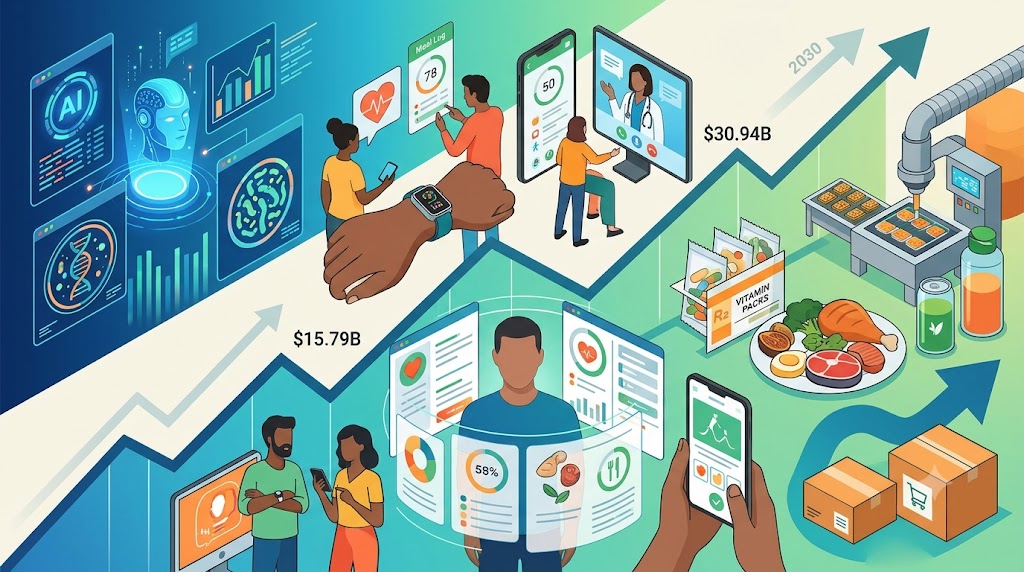
Nutrition is becoming more than a daily health choice, it is emerging as a growing business opportunity. As consumers look for ways to improve their diets, manage their lifestyles and make informed wellness decisions, businesses are moving beyond standardised food and supplement products towards more personalised solutions. Artificial intelligence (AI), wearable devices and health-tracking platforms are helping drive this shift, creating new opportunities across the food, nutrition and digital healthcare industries.
The global personalised nutrition market is projected to grow from $15.79 billion to $30.94 billion by 2030, reflecting increasing interest in tailored dietary guidance and data-driven wellness. For businesses, this growth presents an opportunity to develop differentiated products, build recurring revenue through subscriptions and strengthen customer loyalty. However, long-term success will depend on making personalised nutrition affordable, scientifically credible and accessible to a wider consumer base.
AI and Health Data Are Transforming Nutrition
Technology is changing how nutrition businesses understand consumer needs. Digital platforms can use information about dietary habits, physical activity, sleep and selected health indicators to provide more relevant recommendations. Some services also incorporate genetic testing, gut microbiome analysis or continuous glucose monitoring, although the usefulness of these methods varies depending on the individual and the intended purpose.
AI-powered applications can help users track meals, estimate nutritional intake and plan diets around their preferences. For businesses, these capabilities create opportunities to offer digital consultations, personalised meal plans and ongoing wellness services.
The commercial advantage lies in making nutrition guidance more practical and engaging. Rather than relying solely on one-time product sales, businesses can develop services that maintain customer relationships over time.
New Opportunities for Food and Supplement Businesses
The demand for personalised wellness is encouraging companies to explore customised supplement packs, protein-rich foods, functional beverages and products designed around specific dietary preferences.
For Indian businesses, this trend offers opportunities to serve consumers seeking convenient nutrition options suited to their lifestyles and budgets. Food manufacturers can develop new product lines, supplement brands can strengthen their direct-to-consumer channels, and smaller businesses can use digital platforms to reach customers beyond local markets.
However, personalisation must deliver genuine value. Clear nutritional information, consistent product quality and responsible health claims will be essential to building consumer trust.
Subscription Models Can Support Business Growth
Personalised nutrition also creates opportunities for recurring revenue. Businesses can combine digital assessments, nutrition consultations, progress tracking and regular product deliveries into subscription-based services.
These models can encourage repeat purchases and provide companies with a more predictable revenue stream. Retailers and e-commerce platforms can also use relevant product recommendations to improve customer engagement and encourage loyalty.
The key is to offer clear benefits that justify the cost. Customers are more likely to remain engaged when services are convenient, recommendations are useful and progress can be assessed realistically.
Affordability and Trust Will Shape the Market
Despite its growth potential, personalised nutrition faces challenges. Laboratory tests, specialist consultations and connected devices can make some services expensive, limiting access for price-sensitive consumers.
Data privacy is another important consideration, particularly when companies collect sensitive health or genetic information. Businesses must explain how customer data is used and stored, obtain appropriate consent and maintain strong security safeguards.
Scientific credibility will also influence the market’s development. Not every test or AI-generated recommendation has been proven to improve long-term health outcomes. Companies that avoid exaggerated promises and focus on evidence-based guidance are more likely to build lasting consumer confidence.
The Business Outlook
Personalised nutrition is creating opportunities across food manufacturing, supplements, digital health, retail and wellness services. As demand for tailored health guidance grows, businesses have an opportunity to develop new products, strengthen customer relationships and create services that extend beyond traditional retail.
The strongest business models will combine useful technology with sound nutrition principles, accessible pricing and transparent practices. Ultimately, the future of personalised nutrition will depend not on how much data companies collect, but on how effectively they turn that information into practical benefits for consumers.